
Research exhibition, MIZ ZHdK Zurich
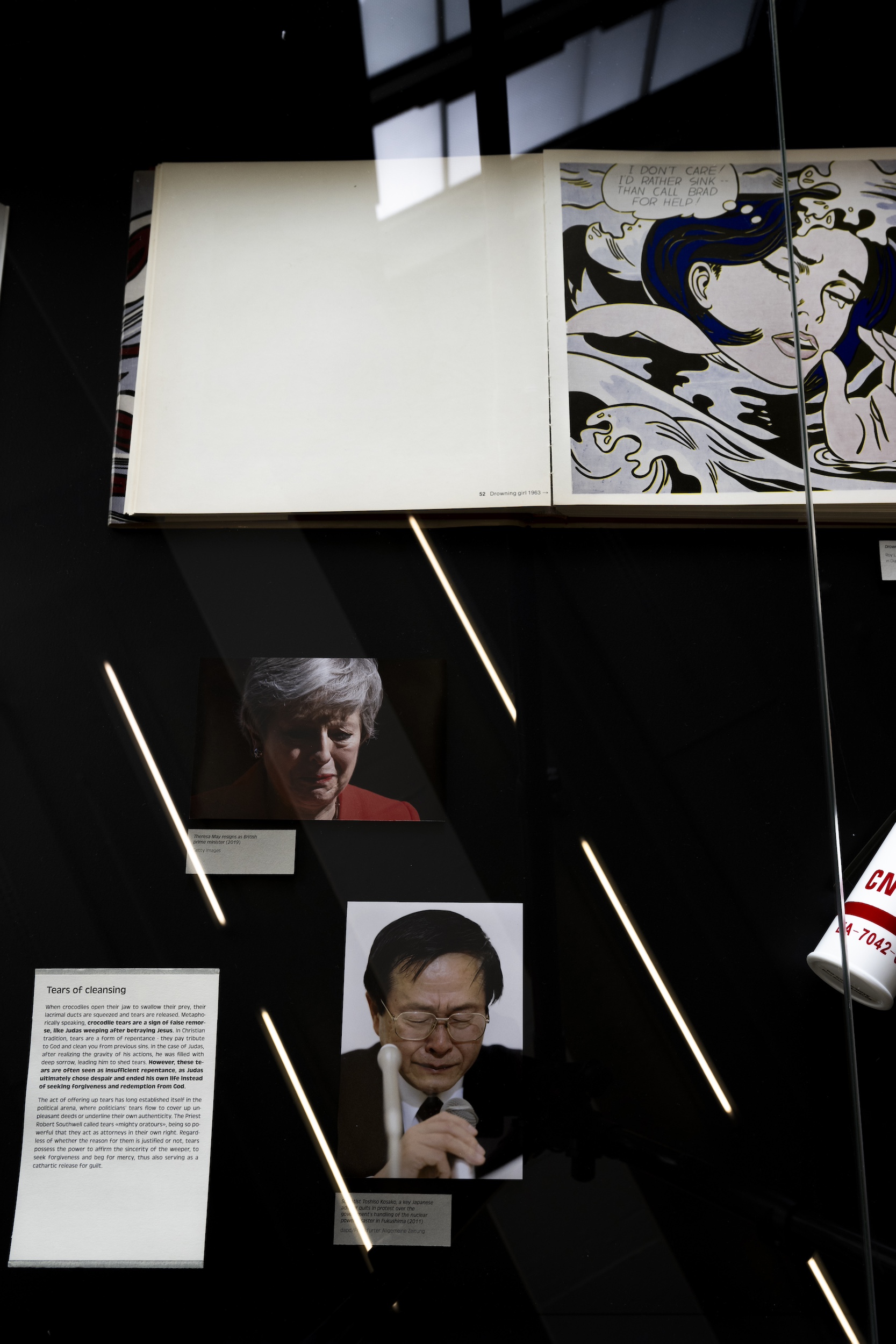
As part of the exhibition “The person in question”, which addressed the production of “persons” and the borderline, where personhood as a category is in question, Nadine Schütz, Celine Radloff and Larissa Platz conceived a “Typology of tears”:
They roll and flow, dry up and shine: As a shimmering trail, the tears run. Coupled to the eye they are located at the surface of the body and represent a mediating boundary between inner and outer, marking individual expression and being legible to the outside.
In “Typology of tears” we looked at different types of tears occurring in a space of alienation, reflecting on the powerful yet ambivalent potentiality of tears. A power based on the promises carried by tears – the promise of relief, of comfort, of curing a wound, of righting a wrong – and the powerful reactions those promises cause. Carrying the power of promises, tears and their regulation can open up the doors for manipulation and oppression. At the same time, the act of crying as well as holding back one’s tears can become a site for resistance. Tears can indicate the moment when the armored defense against alienation breaks down thus releasing an unbearable tension, while the absence of tears can represent the crumbling fantasy of an invulnerable body.
Building on Susan Buck-Morss essay “Aesthetics and Anaesthetics”, we situated tears within the tension field of sensing and numbness, as a way of reacting to and resisting the alienation of modern life. Buck-Morss reads aesthetics not simply as the study of beauty or the appreciation of art, but rather as a way of experiencing the world that is deeply intertwined with our emotions. It is the way in which we make sense of the world through our senses. Alienation in this context is the feeling of being disconnected from the world around us, the incapability of making sense of the world through senses. Anaesthetics are the ways in which we numb ourselves to the world.
In this divide between sense-making, being alienated and numbing oneself’s, questions emerge: When do tears start flowing? And where are they missing? By creating a non-chronological and incomplete typology of tears, it becomes apparent that while some tears appear indisputably readable others are less visible and legible, creating an ambivalent kaleidoscopic sea of tears. This exhibition took place from May 31 to June 28 2023 at MIZ, Media and Information Center at the Zurich University of the Arts.

Works
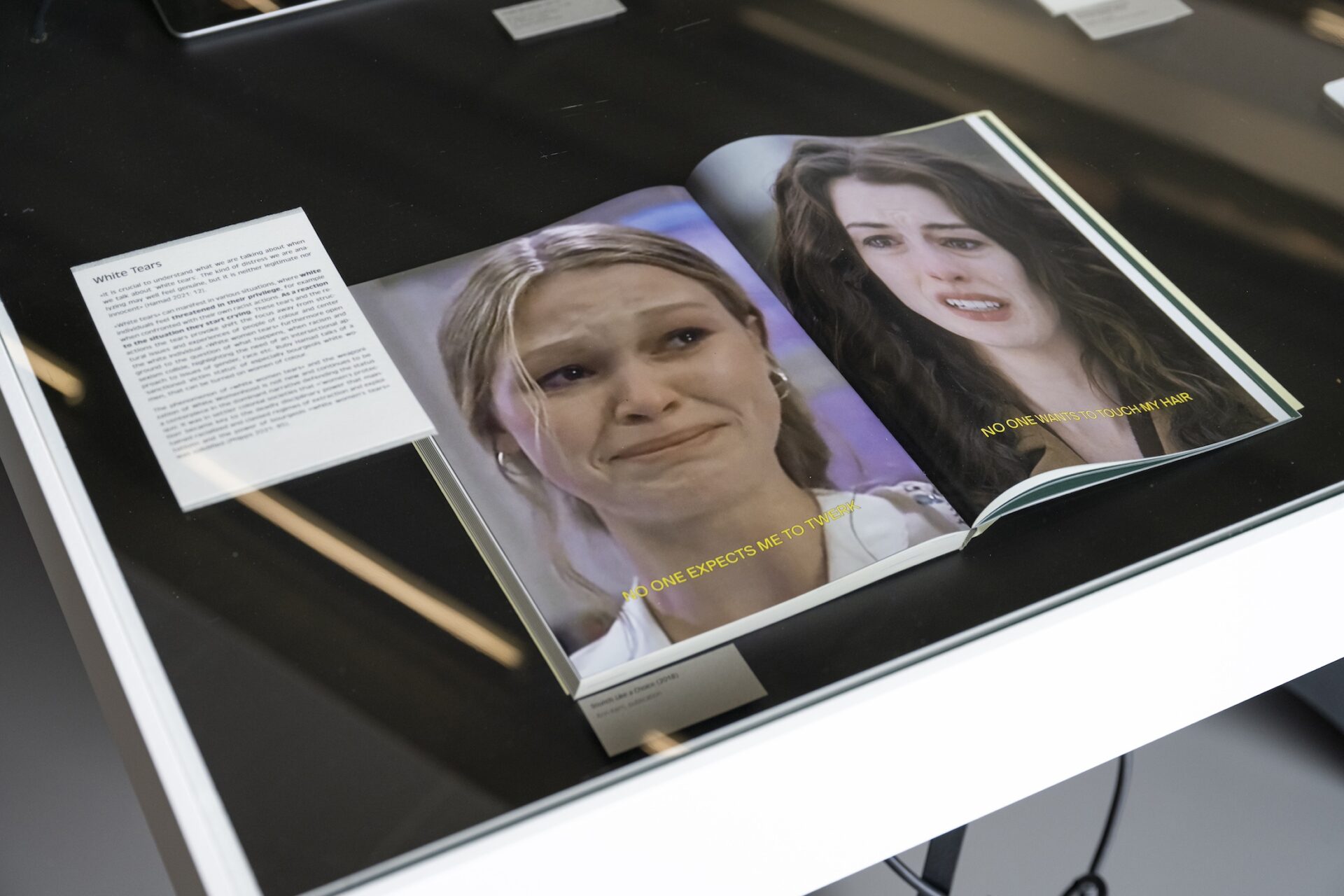
- Sounds Like a Choice, Ann Kern, 2018, publication, 28 x 15 cm, courtesy of the artist
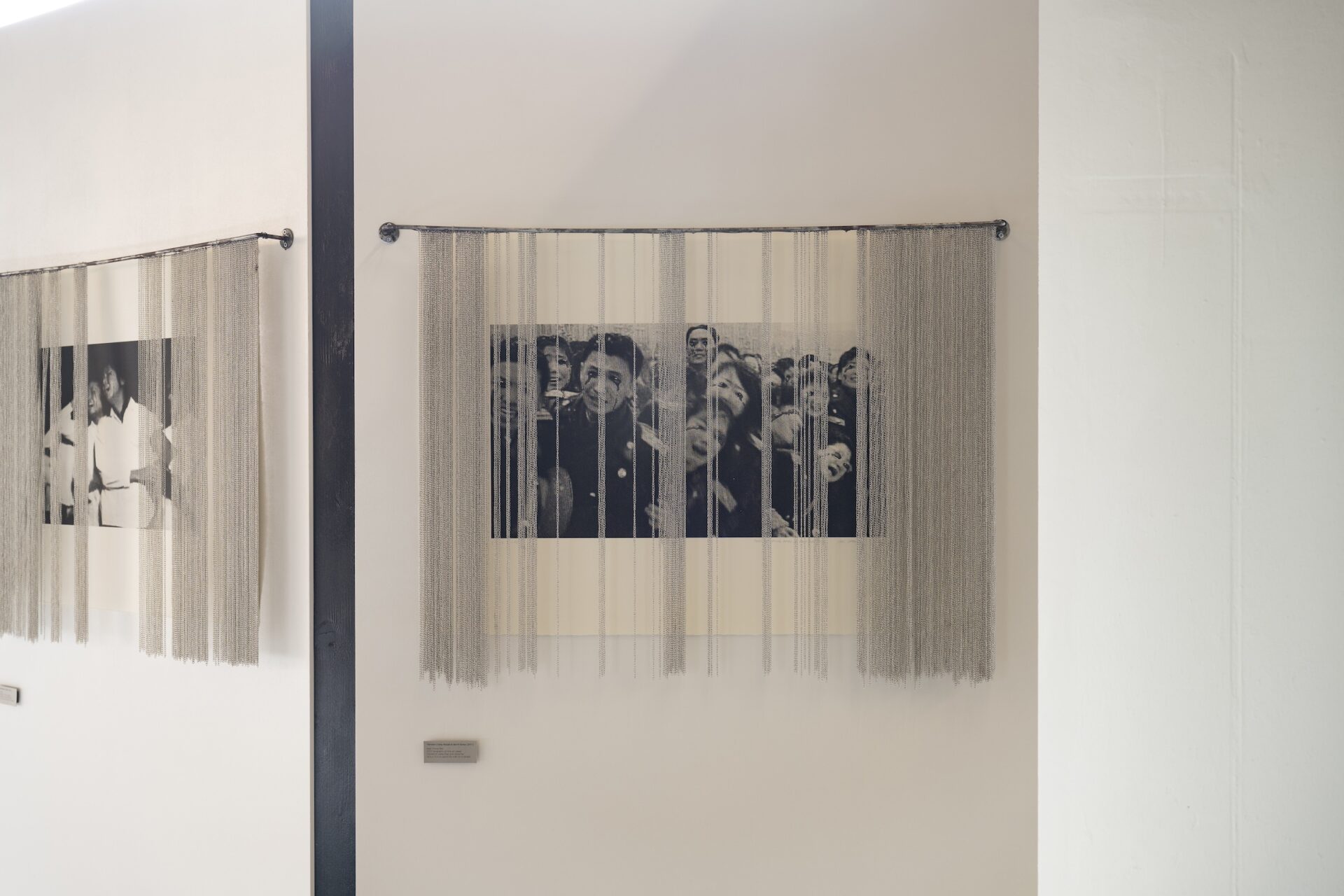
- Thirteen Crying People in North Korea (2011), Isaac Chong Wai, 2022, Serigraphy on fine art paper, framed by cable chain and metal bar,
- Three Crying People in China (2011), Isaac Chong Wai, 2022, Serigraphy on fine art paper, framed by cable chain and metal bar, 56.5 x 75.5 cm (print) 63 x 80 cm (framed), courtesy of Zilberman Gallery, Istanbul
- War tropes I-IV, Antje Ehmann and Harun Farocki, 2011, Multi-channel video installation
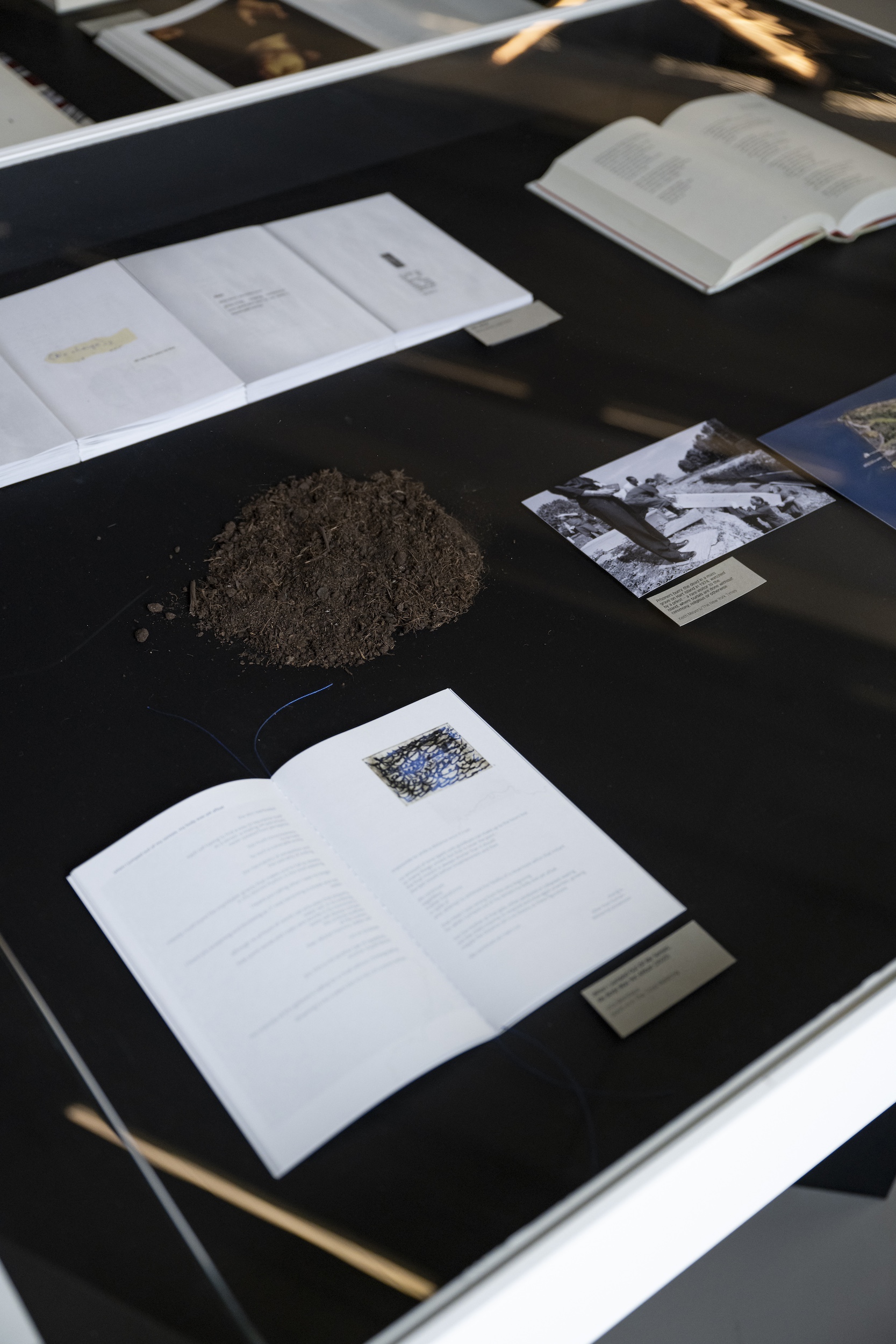
- When I Jumped Out Of My Senses, My Body Was Yet Afloat, Jota Mombaça, 2022, poem in In The Tired Watering, 20 x 12.5 cm